

Every few months, businesses become obsessed with going “viral.”
Scroll through social media for five minutes and you’ll see the term everywhere:
“The viral marketing strategy.”
“The viral content formula.”
“The viral Instagram trend.”
“The viral business hack.”
But take a minute and ask yourself, do you even know what most of these things are?
As someone who owns a marketing company, I think the term “viral” has become less of a meaningful marketing term and more of a buzzword. We’ve started attaching that word to almost anything we want people to pay attention to.
The funny thing is that businesses have spent years chasing virality as if it were the ultimate goal. But even before the word became overused, going viral was never the metric most businesses should have been optimizing for.
Virality doesn’t mean you’re connecting with the right people, building trust, communicating your value, or helping potential customers understand how you can solve a problem they care about. Yet those things are what actually drive business growth.
The Problem With Viral Content
The promise is appealing. One piece of content takes off, reaches thousands or even millions of people, and suddenly, your business has more visibility than ever before.
But visibility by itself isn’t a marketing strategy.
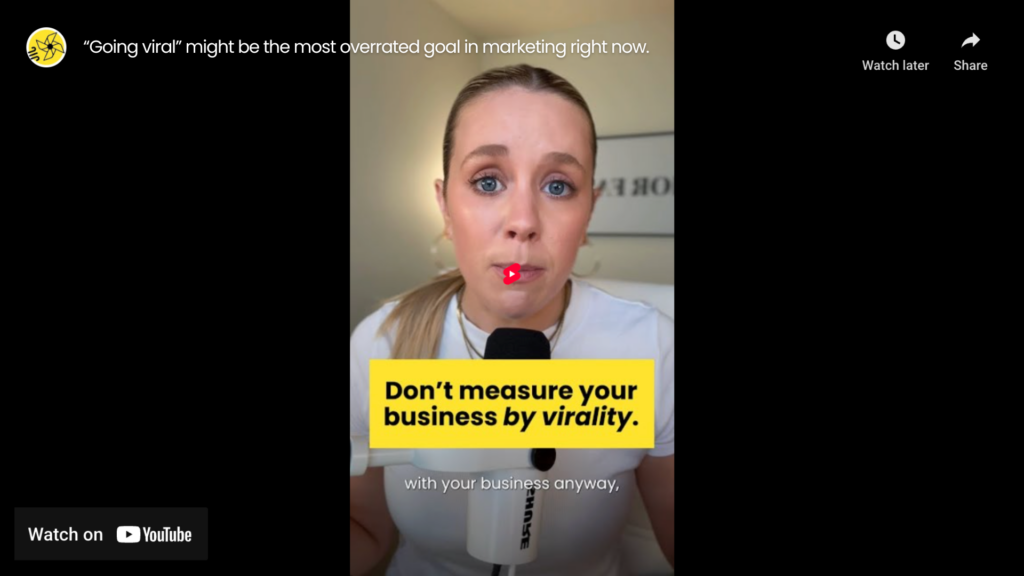
For most businesses, you need to get in front of the right people.
A local service provider doesn’t need a million strangers watching their videos. A business consultant doesn’t need internet fame.
What they need is for the right audience to understand what they do, trust their expertise, and remember them when they’re ready to make a decision.
Virality doesn’t automatically create any of those outcomes.
The Metrics Businesses Should Care About Instead
One of the biggest challenges with social media is that it’s easy to misinterpret attention for success.
A post can generate hundreds of thousands of views and still have very little impact on the business itself.
Meanwhile, another post might only reach a few hundred people but generate qualified leads, meaningful conversations, referrals, or opportunities.
Which one was actually more successful?
The answer is obvious when you look at business outcomes.
Instead of asking, “How many people saw this?” businesses should be asking questions like:
- Did this attract the right audience?
- Did people better understand what we do?
- Did this build trust?
- Did it create demand?
- Did it move someone closer to working with us?
Those are the metrics that matter because those are the metrics that contribute to actual growth.
Virality Isn’t the Same as Credibility
Visibility does not automatically lead to more trust.
People don’t trust businesses because they happened to see one popular post. They trust businesses because they’ve repeatedly demonstrated expertise, consistency, and a clear understanding of the problems they’re trying to solve.
Think about the brands, founders, and companies you trust most. Chances are, you don’t trust them because they went viral.
You trust them because you’ve seen them show up consistently. You’ve seen their perspective. You’ve learned from their content. You’ve developed confidence in their expertise over time.
Trust and credibility are built through repeated exposure and positive experiences.
Most Businesses Don’t Need a Viral Moment
Your business’s success on social media should not be determined by whether you have a viral moment.
They grow because they consistently communicate their value, build relationships with their audience, and establish themselves as trusted experts.
That growth may not be as exciting as a sudden spike in views, but it’s much more sustainable.
People rarely buy because they stumbled across one piece of content. They buy because:
- They’ve seen your business enough times to trust it
- Your messaging is clear
- They understand what makes you different
- Your content has consistently reinforced that you’re someone who can help them
None of those things requires virality.
What Businesses Should Focus on Instead
If your goal is long-term growth, there are far more effective things to focus on than trying to create the next viral post.
Build Trust
Create content that helps your audience understand their problems, answers their questions, and demonstrates your expertise. When you consistently earn trust, that tends to correlate with gaining new customers.
Have a Clear Point of View
The internet doesn’t need another company repeating the same advice everyone else is sharing. People remember businesses that have a unique perspective and communicate what they believe.
Stay Consistent
One viral post might create a temporary spike in attention, but consistent content creates familiarity. Familiarity creates trust. Trust creates opportunities.
Create Content that Serves Your Audience
Your content may not be everyone’s cup of tea, but if it’s specific to your target audience, that’s not a bad thing! The goal should be to attract the right people and give them a reason to keep paying attention.
The Way People Discover Businesses Is Changing
Why does this conversation matter so much right now? Because the way people discover businesses is changing.
People are learning about companies through social media, founder content, recommendations, AI-generated search results, and other digital media.
That means your content could be your first impression. When people encounter your brand for the first time, they aren’t necessarily asking, “How many views did this get?”
They’re asking, “Do I trust this?”
That’s why credibility is becoming one of the most valuable assets a business can build.
People want to be confident that the person or company they’re considering actually understands their needs.
What Wins in the Long Run
Going viral can feel like a shortcut to visibility, growth, and success. But most businesses don’t need a strategy, not a shortcut.
They need clear messaging, valuable content, a strong point of view, and a consistent presence that builds trust over time.
The businesses that have long-term, sustainable success online are the ones that create credibility, earn trust, and stay top of mind with the people who matter most.
Because at the end of the day, that’s what drives real business growth.
Frequently Asked Questions
Is going viral good for a business?
It can be, but virality alone doesn’t guarantee leads, sales, or long-term growth. The value depends on whether the content reaches the right audience and supports business goals.
What should businesses measure instead of views?
Focus on metrics such as qualified leads, inquiries, conversions, engagement quality, website actions, and overall brand trust rather than views.
What type of content builds trust?
Content that demonstrates expertise, answers audience questions, shares real experiences, offers clear perspectives, and consistently provides value tends to build trust over time.