

By November, your website should be focused on one thing—turning browsers into buyers. The prep work is over. Holiday shoppers are already comparing prices, checking reviews, and making fast decisions. But if your business’s website still feels like it’s in setup mode, you’re losing momentum when it matters most.
This month isn’t about adding more graphics or running last-minute promos. It’s about tightening what’s already there: clear offers, simple navigation, fast checkout, and proof that people can trust you.
The businesses that get this right will see steady sales all season long. The ones that don’t may end up spending December wondering why their traffic didn’t translate into revenue.
1. Optimize Your Site for Peak Holiday Conversion Season
The most common mistake small businesses make this time of year is hiding their biggest promotions behind too many steps. If your Black Friday or Cyber Monday deal lives in a dropdown or secondary banner, it’s already underperforming. People are moving fast, and your website has about 8 seconds to make a good impression and convince them to stay.
So, how can you make sure customers are sticking around long enough to see your holiday sales? Make your offer crystal clear.
The first thing visitors notice should be your best deal, not your logo or background image. If they have to scroll or open a menu to find it, you’ve already created friction.
And that’s what kills conversions.
The offer in your headline should match the language in your call to action. The path from interest to purchase should feel obvious, not effortful. When every piece of your page is telling the same story—what’s for sale, why it’s worth it, and how to get it—people act faster.
With the average ecommerce site only converting between two and four percent of visitors, even small points of confusion come at a cost.
But that percentage will increase when people know exactly what to click.
If you’re not sure how clear your website is, look at your analytics. See what people click first, where they stop scrolling, and what they ignore. It’s the simplest way to tell whether your website is selling or just showing up.
2. Simplify the Mobile Shopping Experience for Faster Sales
Holiday shoppers aren’t wandering your site for fun. They’re on a mission to finish their holiday shopping list as quickly as possible.
Most are juggling distractions, comparing options, and making split-second decisions about whether to stay or move on. So if your website feels like work—too many steps, too many choices—they’ll leave before they buy.
That shows up in the numbers. Roughly 70% of online carts are abandoned, and the rate climbs past 80% on mobile. Which is why your goal this month is to make buying feel easy.
When your site mirrors how people actually shop—by price, popularity, or urgency—it removes friction.
Categories like “Gifts Under $50,” “Best Sellers,” or “Last-Minute Finds” give them fast answers and fewer decisions. And bundles work the same way. A single click that adds everything to cart feels like relief to someone trying to finish their list.
But don’t ignore your mobile website. Most shoppers are buying from their phones between errands, while watching TV, or standing in line somewhere.
Which means if your site doesn’t load quickly or fit their screen cleanly, they’ll close it and move to the next option.
So, before the season ramps up, pull up your website on your phone and try to buy something. Go through the full process, and if anything feels slow, confusing, or hard to tap, fix it now before your customers feel it too.
Mobile isn’t secondary traffic anymore. It’s the majority. Treat it like the storefront everyone actually walks into.
3. Add Trust Signals That Turn Holiday Clicks Into Customers
The closer people get to buying, the more they start comparing, and during the holidays, that comparison never stops.
Shoppers are scanning for signs they can trust you: reviews that sound real, recognizable logos, and quick reassurance that others have had a good experience. When they find it, they stop questioning and start buying.
Make that proof easy to find where decisions happen. A testimonial or star rating on a product page builds confidence faster than any sales copy. And real customer photos, first names, and clear policies—like shipping guarantees or simple returns—give people a reason to believe the purchase will go smoothly.

Those details are what create confidence.
In Breezy’s terms, this is where Credibility of Expertise and Quality of Impression meet. Trust is shown clearly, reinforced consistently, and carried through every click and interaction.
4. Connect Values and Sales With Small Business Saturday
If you’re a small business, this weekend is your moment. Shoppers want to support local brands, but they might just need a reminder. However, it’s your job to make sure that the support feels easy and meaningful.
Start by bringing your story forward. Tell people where you’re based, who you serve, and what makes your work different from a big-box experience. Even a few sentences on your homepage or a quick social post can shift how people see you.
Because when visitors understand who they’re buying from, it feels more personal, and that’s what drives them to check out.
According to Salsify’s 2025 Holiday Pulse Report, 61% of consumers say brand values influence their buying decisions more than price. That means your mission (not your markdowns) might be what converts someone who’s deciding between you and Amazon.
This is a good time to update your homepage banner or add a short message that connects your offer to your story.
A simple “Shop Small. Support Local.” paired with your brand’s voice is enough. You can even tie it to a cause, like donating a portion of sales to a local nonprofit or hosting a giveaway for your community.
The goal right now isn’t to compete on price or volume. It’s to remind people that when they buy from you, they’re investing in a person, a neighborhood, a shared story.
That’s what makes a small business feel big in the right way, especially during the holiday shopping season.
5. Reduce Holiday Cart Drop-Offs With Clear Answers
The closer it gets to the holidays, the less patience people have for uncertainty.
They might love what you’re selling, but if they can’t tell when it’ll arrive or how returns work, hesitation takes over, and hesitation kills momentum.
Every question customers might have—when it ships, how long it takes, what to do if it’s not right—should already be answered on the page.
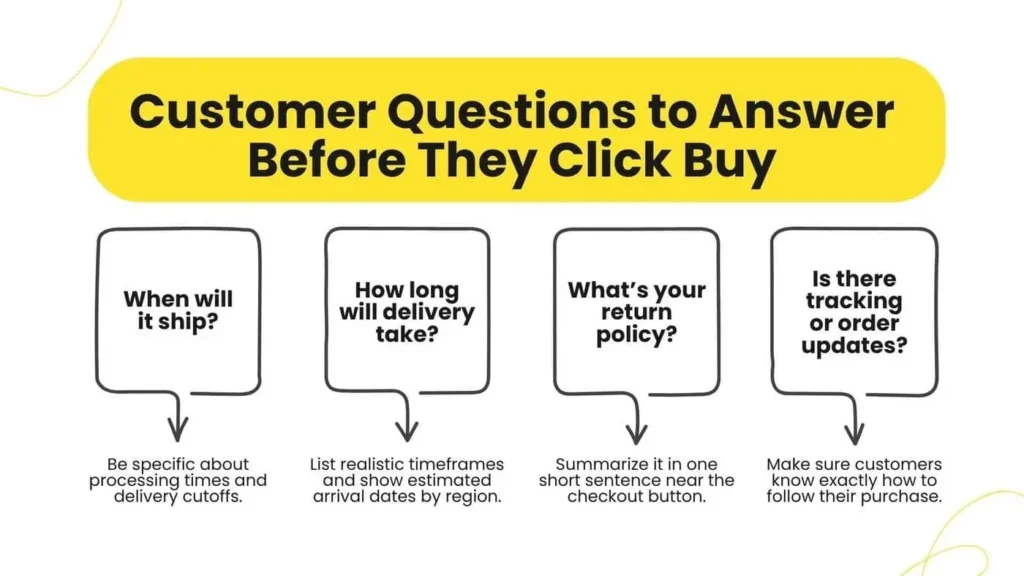
Think through where people hesitate and put those answers where they’ll see them.
- Product pages should show delivery dates, stock levels, and shipping options so buyers don’t have to guess.
- Add-to-cart and checkout screens should include delivery cutoffs and return windows near the total.
- The homepage or a slim sitewide banner should call out key dates like “Order by December 15 for Christmas delivery” or “Free exchanges through January 10.”
- Confirmation emails should repeat shipping timelines and next steps so buyers feel confident after checkout.
When those answers are visible, people don’t stop to think about what might go wrong. They keep buying because everything feels handled.
The Post-Season Website Audit That Improves Conversions
If you’ve made the updates above, your site should be running smoothly by the time Black Friday and Cyber Monday hit. From there, the goal shifts from reacting to refining.
These are the habits that turn a good season into long-term growth:
- Make sure your best deals are easy to find. If someone has to scroll or click to see them, you’re losing conversions.
- Keep the path from interest to check out short. Every extra step costs attention and sales.
- Reviews, guarantees, and policies should align across every page so your brand feels dependable from start to finish.
- Prepare to update messaging fast if shipping changes or inventory runs low. Agility earns credibility.
Once the rush is over, document what worked. Create a simple spreadsheet that lists your campaigns, links, and conversion rates. The data you capture now becomes the playbook for next year, so instead of guessing, you’re improving.
November Is the Blueprint for Better Website Performance
November is the real test of how well your website converts under pressure.
Every extra click, scroll, or delay costs attention, and during the holidays, attention equals sales. The data you collect this month tells you exactly where your site helps or hurts holiday website conversions.
Once the season slows down, use that insight to strengthen what’s working: simplify checkout, refresh trust signals, and document your best-performing pages.
Those small, consistent November website updates will carry your momentum into next year—keeping your site ready to sell, not stall, long after the holiday rush.